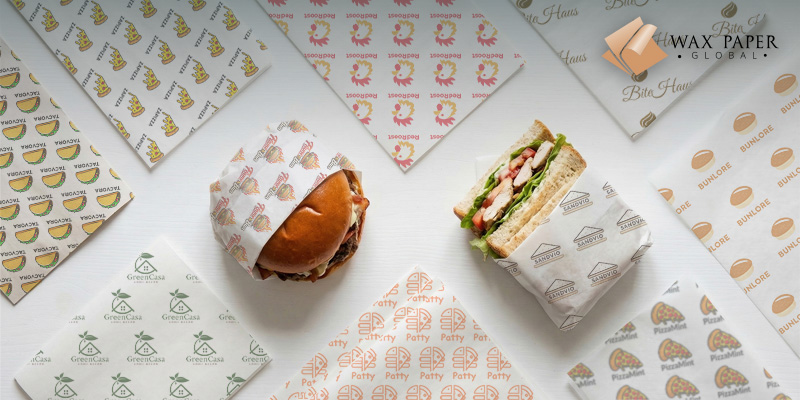
A custom food paper is not a simple element which just wraps your food and “nice to have” rather it is an essential branding tool that has the capability to take your brand to the next level. In retrospect, if you think deeply that you put extra effort into making your food stand out, how would you deliver that message to your customers? If your food is great how would you make it memorable when customers left your place and may find it hard to remember your brand name? The answer lies in the packaging.
From protecting the food to increasing brand visibility, a well-designed and crafted custom food paper does more service to your brand than any other product. This blog sketches for you all the key specs, printing methods, material choices, and technical details you should know before getting started.
Many brands miss the opportunity to understand the core purpose of the branding. They believe that their food is enough to create a memory but in this hustled life a quick food grab from some food truck or a restaurant which would be consumed later, even if the food is good with no identity the memory is already lost. So a custom food wrapping paper;
Branding changes the status of a wrap from ordinary to business-boosting papers that stand out in a competitive market showcasing their unique identity.
Every individual has their personal choices and likings. So, before designing anything, set a theme and think about what your brand or you want to represent - a minimalist story or a vibrant and colorful aesthetic. Think about your wrapping paper as a story pad containing your ideas and features of the restaurant forward. Be clear in what you want to represent, a subtle logo, fun, luxurious, or organic brand personality. Your branding goals would determine everything i.e. layout, color selection, paper thickness, printing technique, and final finishes.
Not all food papers carry equal features and this difference is ensured by materials. Functionality is a dependent feature that heavily relies on quality paper options. We present an overview of the commonly used materials;
| Material | Feature | Uses |
|---|---|---|
| Wax Paper | Water-resistant and is semi-translucent | Wrapping cold food items or bakery goods |
| Parchment Paper | Highly non-stick and heat-resistant | Baking and cooking food |
| Greaseproof Paper | Excellent grease and moisture resistant, smooth printing surface | Wrapping sandwiches, burgers, pastries |
| PE Coated Paper | Contains extra grease barrier | Wrapping high-grease fast food |
| Kraft Paper | Rustic look, highly eco-friendly | Mostly used by organic brands, delis, and cafes |
Anything related to food needs to be completely safe and internationally food-safety compliant. So, before customization, make sure that your paper comply with;
Designing is not that hard as it sounds and we’ll make it super easy for you.
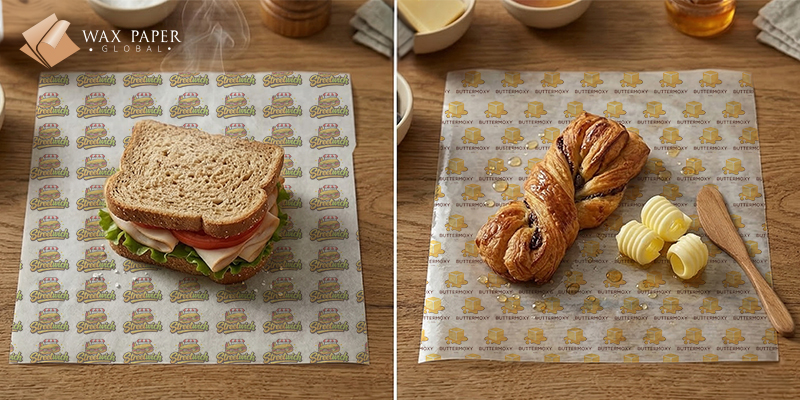
In this procedure your logo repeats diagonally or in a grad layout. This gives your custom food paper a uniform, clean, and professional look. It works best for all business types.
In this specific design the logos are placed on the corners or edge of the paper. Its more subtle and elegant branding, mostly opted by high-end cafes and bakeries.
A fully printed sheet with patterns, logos, colors, or other brand elements. These food papers create a bold impact and are ideal for quirky or high-energy brands.
At Wax Paper Global three types of printing methods are available and commonly used;
A correct GSM and paper size is essential to determine as the wrong one could have unlimited consequences. Common sizes based on food type includes;
| Food Item | Standard Size |
|---|---|
| Sandwiches/Paninis | 12 x 16 inches |
| Trays and Liners | 16 x 12, 18 x 12 inches |
| Bakery Goods | 8 x 10 inches |
| Burgers | 10 x 10, 12 x 12 inches |
A food paper is the true representation of your brand. Design what your brand truly stands for;
Print testing is important to get complete satisfaction that the design and quality is perfect to move forward. Sampling helps to determine that the ink is not saturated, logos are clear and not blurred, no misprints occur after folding, and whether the colors are correct or not.
Ensure that all the materials used for manufacturing and printing are completely food-safe. Sustainability goes a long way and is much appreciated by every person around the globe.
Designing is all about understanding all the little details of the paper. A perfect design is only achievable if all the elements of the paper are put into the right place. Logo and branding is not about just placing your logo on the sheet but it's a calculated blend of material science, food-safety, and printing technique. When everything is done right your personalized food paper becomes an asset that is ready to forward your brand name and identity to the next level.
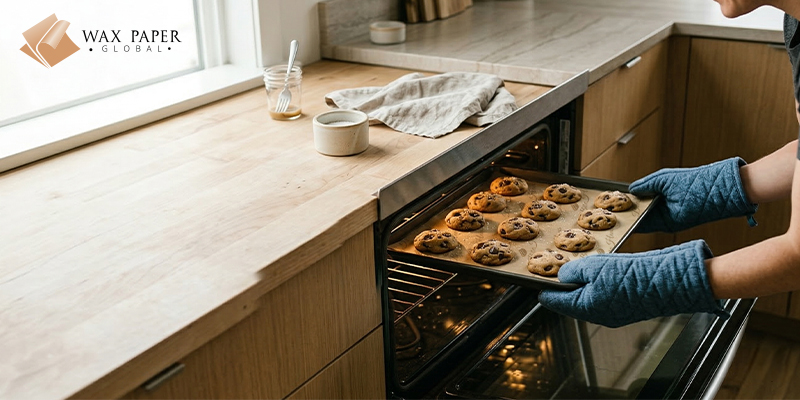
Can Wax Paper Go in the Oven
Learn whether wax paper can be used in the oven and why it may melt or burn. Discover safe alternatives and proper usage...
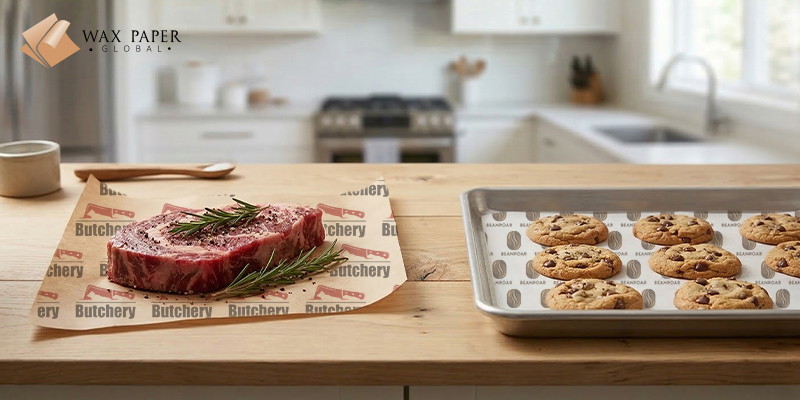
Butcher Paper vs. Parchment...
Discover how butcher paper and parchment paper differ in material, coating, and cooking uses. Find out which paper works...
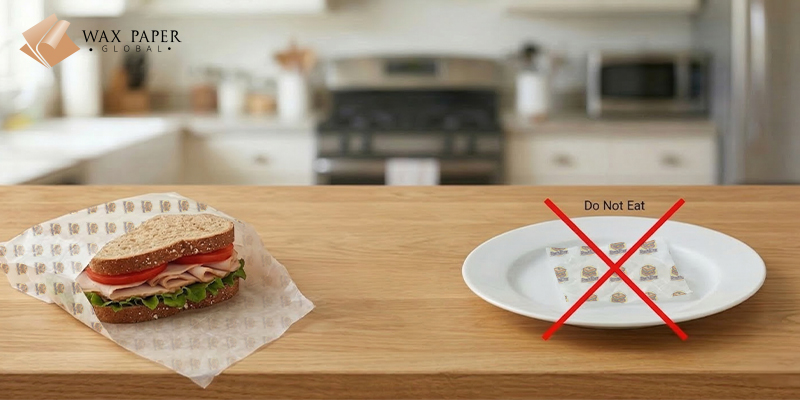
Is Wax Paper Edible or Harmf...
Learn if wax paper is safe to eat, its coating materials, and health risks. Understand proper usage and why it should no...
Dry Wax Paper vs. Wet Wax Pa...
Discover how dry and wet wax paper differ in texture, coating, and performance. Find out which option works best for wra...