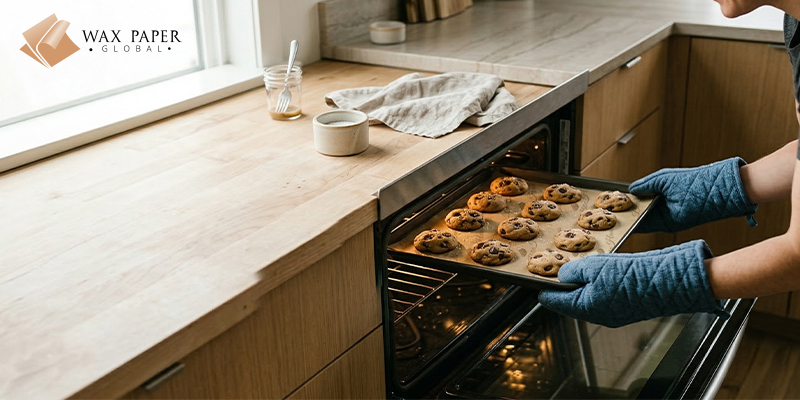
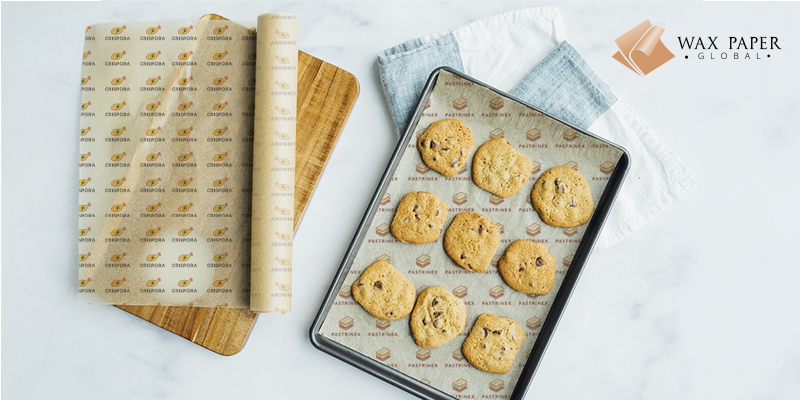
Quick answer: No, wax paper should not go in the oven. Its thin wax coating starts to soften at low temperatures, so in a hot oven it melts onto your food and pan, smokes, and can even catch fire. For baking, use parchment paper (baking paper) instead, which is made to handle oven heat.
At Wax Paper Global every paper is made with a different speciality. Each works best in their own right when they are used according to their abilities. The name - wax paper in itself is very telling of its delicateness and vulnerability towards heat. Wax is usually non-stick so it works for separating ingredients during cooking, lining preparation surfaces, and wrapping food.
But it's just that they don’t work well with heat. If you are looking forward to making the best food of your life it would be necessary that you keep a wax-coated wrap away from heat or high-temperature food items.
A custom printed wax paper is coated with a thin layer of wax. The wax is biodegradable, probably paraffin or soy-wax so that the food remains toxic free. The coating provides the paper an extremely smooth surface that can efficiently resist moisture and prevent food from sticking to the surface of the paper or other surfaces.
| Property | Specification |
|---|---|
| Wax Coating | 6-12 g/m² |
| Base Paper Weight | 30-40 GSM |
| Surface Finish | Extremely smooth and moisture-resistant |
| Primary Use | Cold or mildly hot food wrapping and preparation |
The wax coating protects the food from getting soggy and maintains its texture and flavor by minimizing air exposure. But at the same time, the presence of wax limits its usage towards heat.
This paper is strictly not recommended for oven use, rather it is more of a food storage paper. Wax is vulnerable to heat, as soon as it makes contact with the heat the wax melts. The melting wax then can burn or smoke the paper. The temperature limit looks like;
| Condition | Temperature |
|---|---|
| Wax Smoke Point | 400°F (204°C) |
| Wax Melting Point | 120-150°F (49-65°C) |
| Standard Baking Temperature | 325-450°F (163-232°C) |
These temperatures are far below the standard oven temperature that stands at 250-260°C. That’s why a silicone coated parchment paper is considered best for baking and oven use as it can withstand heat for up to 260°C easily without burning.
Many people assume that a coated food wrapping paper is safe to use in the oven and sometimes try to use them interchangeably. On top of that both papers also share almost identical appearance that confuses the customers. Although their differences can be judged with a little closer look as the wax has a little greasy feel while the parchment is clean, sleek, and smooth. With the presence of wax it's also a little heavier. The technicality of differences are not complicated and could be understood with little knowledge on hands.
The consequences of using a coated paper could go from being minute to disastrous. Like;
The paraffin or soy wax on wax paper begins to soften at roughly 115–150°F (46–65°C), far below normal baking temperatures of 325–450°F (160–230°C). That is why wax paper is fine at room temperature or in the fridge, but not in a hot oven. Even at low oven settings, the wax will soften and transfer onto food and baking trays.
It can. Once the wax melts, the bare paper underneath dries out quickly. Any edge that touches the oven walls, heating element or a hot pan can scorch, smoke and, at high heat, catch fire. If you have already put wax paper in the oven and see smoke, turn the oven off, let it cool, and remove the paper once it is safe to touch.
Yes, for short heating. Wax paper is commonly used to cover food in the microwave to stop splatters, and microwaves heat the food rather than the paper itself. Avoid long cooking times or direct contact with very hot, fatty food, as the wax can soften. For anything that needs real cooking heat, choose parchment paper.
Baking paper (parchment paper) is coated with silicone, which handles oven heat and stops food from sticking. Wax paper is coated with wax, which gives a moisture- and grease-resistant surface but cannot take heat. Use baking paper for cookies, cakes, roasting and air fryers. Use wax paper for wrapping sandwiches and burgers, lining counters while rolling dough, separating layers of food in the fridge or freezer, and no-bake treats.
No, a wax coated paper is not safe for oven use. It has great capacity to keep your food warm and fresh for a longer period of time similar to what freezer paper excels in. But, it doesn't have a solid tolerance towards high temperatures. Using it in the oven would only create problems and in hindsight could ruin the whole cooking experience.
The food-grade wax itself is not poisonous, but melted wax ends up on your food, and burning paper releases smoke. It is not safe practice, so use parchment paper for baking.
No. Air fryers blow very hot air directly onto the paper, which melts the wax and can lift the paper into the heating element. Use air-fryer parchment liners instead.
Parchment (baking) paper, a silicone baking mat, or a lightly greased tray.
Butcher Paper vs. Parchment...
Discover how butcher paper and parchment paper differ in material, coating, and cooking uses. Find out which paper works...
Is Wax Paper Edible or Harmf...
Learn if wax paper is safe to eat, its coating materials, and health risks. Understand proper usage and why it should no...
Dry Wax Paper vs. Wet Wax Pa...
Discover how dry and wet wax paper differ in texture, coating, and performance. Find out which option works best for wra...
Wax Paper vs. Parchment Pape...
Discover how wax paper and parchment paper differ in coating, heat tolerance, and usage for baking, cooking, and food pa...