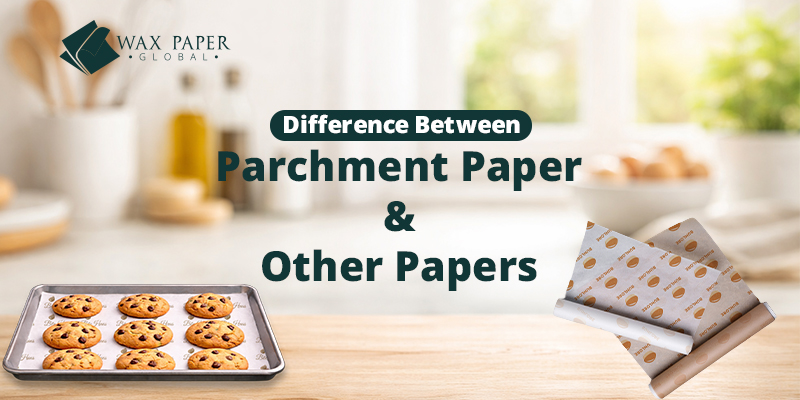
Have you ever found yourself strolling in the market and looking at all sorts of different papers and thinking “they all look the same” - well, they are not, and they can become a reason for everything going wrong. You can end up with cookies stuck to the tray, grease soaking through the paper, and smoke filling the oven. In the world of baking, don’t let your hours of work to be ruined by a wrong paper sheet.
From parchment paper custom to wax paper and butter paper, each food wrapping paper serves a different purpose and caters to its abilities. Mixing them up could prove to be disastrous, from food-safety to baking results. That‘s why bakers and other food businesses need to turn to an “Ultimate guide to parchment paper” before stocking their kitchen.
Before getting into the realm of differences, it makes it easy to understand what exactly sets parchment paper apart. For baking, a durable and heat-resistant paper with non-stick qualities is essential, and parchment paper is just that. Naturally, this raises a common question among bakers on what type to use. The answer is detailed in “which parchment paper is best for baking” which explores all the factors that one needs to understand.
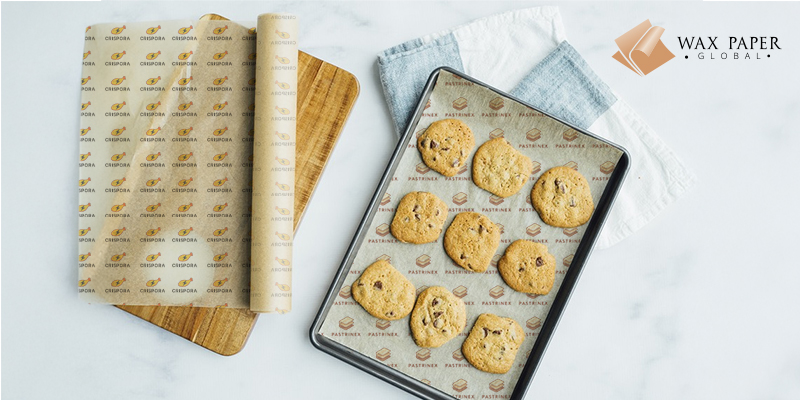
Printed parchment paper for food uses are not limited and are widely used for roasting, steaming, wrapping, and food presentation. As marketing is the need for our time, parchment paper gives that opportunity as well, with personalized branding. You can find all the answers to your questions in “Can you custom print parchment paper” and would get the whole idea on how you can combine functionality with visual appeal.
Sometimes, with so many options on hand, one might get confused among them. Efficiency in the kitchen is more related to selecting the right tools than just having skills. Recognize “How parchment paper helps bakers bake smarter” and then make a conscious decision on what parchment paper is and what paper you need for a smooth and flawless bake.
When we have completely established what parchment paper stands for, it's high time to look at how it compares to other papers that are commonly used in the kitchen and might have some similar or distinctive qualities to it. In the sections below, we will break down key differences and identification points between various food papers and parchment paper. So, you can have a better idea when to use each one.
Parchment paper is made from cellulose paper and specially treated to attain maximum durability. It is a silicone-coated paper which gives it its exceptional heat resistant, non-stick and greaseproof qualities. Meanwhile, butter paper sheets are simple ones with minimal or no treatment. It can be coated with wax or paraffin but is more suitable for wrapping and packaging of food.
| Specification | Parchment Paper | Butter Paper |
|---|---|---|
| Heat Resistance | 220-230°C (428-450°F) | Very Mild, Not oven safe |
| Moisture Resistance | Above average | Limited |
| Grease Resistance | Excellent | Moderate |
| Non-Stick Properties | Yes, even improve with silicone-coating | Limited, not that reliable under extreme conditions |
| Grammage | 35-60 GSM | 30-40 GSM |
| Uses | Lining trays, baking, roasting, steaming, air frying | Separating and wrapping food items, dough rolling |
| Oven Safety | Yes | No |
| Risks | If used above limited temperature it may burn or get brown | Wax can melt causing smoke and fire risks |
In a simplistic manner parchment paper is for cooking while a butter paper is only appropriate for food wrapping and packaging. Parchment paper can bear extensive heat and is thus suitable for baking and cooking without falling apart. Butter paper on the other hand is lightweight with wax coatings which would quickly melt upon high heat exposure. So, never use butter paper for baking purposes and doing the mistake of combining it with parchment paper.
Among all papers parchment and custom wax paper for food share the most similarity - in terms of their outlook and finish. But looking under that hood they are designed to perform very different jobs. Parchment paper is silicon coated while wax paper, as evident from its name, is coated with food-grade wax.
Custom printed parchment paper is oven-safe with an ability to withstand high temperature without tearing or damage. Wax paper is not heat-resistant, it can tolerate limited and very mild heat. It is highly recommended for cold storage or just wrapping food.
Parchment paper has excellent non-stick performance while wax paper has a limited role in this section. Wax paper is ideal for wrapping food, covering counters while rolling dough, and food prepping. On the other hand, parchment paper is best for baking, cooking at high temperature, or steaming and roasting.
Parchment and baking paper are almost identical and their difference is mostly dependent on coating and terminology. Parchment paper is a cellulose-based paper with silicone-coating on both sides of the paper. This coating gives it its heat-resistant and non-stick properties.
On the other hand baking paper in many regions like the UK, Australia, or Europe is often called parchment paper. The reasons include that the paper has the same silicone-coating and offers the same heat-resistant and non-stick properties. But if a baking paper is not properly manufactured it has high chances of disintegrating with heat and moisture contact.
| Feature | Parchment Paper | Baking Paper |
|---|---|---|
| Coating | Silicone Coating (both sides) | Silicone Coating (single or double side) |
| Greaseproof Resistance | Excellent | Excellent |
| Heat Resistance | 230°C or above | 200-230°C |
| Non-Stick Property | Excellent | Excellent |
| Regional Use | Globally used | Commonly used term in UK and Europe |
Both parchment paper and butcher paper are created for serving two distinct purposes. They both differ in coating, food safety, heat tolerance and resistance. Butcher paper is thicker, uncoated, and lightly treated kraft paper that is totally different from cellulose-based paper.
Custom butcher paper for food is ideal for storing or wrapping food and is not recommended for cooking purposes. It is a breathable and absorbent paper but is not heat-resistant or non-stick. This goes in contrast with parchment paper whose primary job is baking and excellent heat-resistance.
| Feature | Parchment Paper | Butcher Paper |
|---|---|---|
| Coating | Silicone Coating | No Coating |
| Greaseproof Resistance | Excellent | Moderate |
| Heat Resistance | 230°C or above | No - not safe for oven use |
| Non-Stick Property | Excellent | No |
| Uses | Cooking and Baking | Storage and Wrapping |
Again these two papers are highly confused due to the similarity in their appearance. But they highly differ in their performance and coating. Parchment paper is made from cellulose-based fibres or paper whereas greaseproof paper is made from wood pulp and is a densely refined paper with no silicone-coatings.
Custom printed greaseproof paper is not fully grease or non-stick and has limited heat tolerance. The parchment paper excels in all the qualities and has excellent heat and grease resistance. Greaseproof paper is mostly used for wrapping food, lining trays, food presentation, and short over reheating.
Although it doesn’t have qualities like parchment paper, it has a great surface for printing which brings out clear and vibrant colors perfect for personalized branding, a quality which is not that prominent in parchment paper. For more detailed information on greaseproof paper visit “Ultimate guide to greaseproof paper” and get first hand all important information. Meanwhile, a simplistic difference is summarized below;
| Feature | Parchment Paper | Greaseproof Paper |
|---|---|---|
| Coating | Silicone Coating | Uncoated |
| Greaseproof Resistance | Excellent | Moderate |
| Heat Resistance | 230°C or above | 180-200°C |
| Non-Stick Property | Excellent | No |
| Uses | Cooking and Baking | Serving, Presentation, Wrapping food |
| Printing Options | Limited | Perfect for branding and promotion |
Many times parchment paper and baking sheets are used together in baking. But their roles are totally different - one is a disposable liner and the other is a reusable baking tool.
A baking sheet is a rigid and flat metal pan primarily designed to hold food in place in the oven. It has exceptional heat tolerance for up to 260°C (500°F) and above and is reusable. Baking sheet does require some greasing or lining and is commonly used for roasting proteins or vegetables, baking cooking and pastries.
Parchment paper is also highly heat-resistant but contains silicon-coating and needs to be disposed after one use. It helps in even and consistent baking with easy cleanup. Parchment paper eliminates the need for greasing or oiling of the surface, saving food-prep time.
| Feature | Parchment Paper | Baking Sheet |
|---|---|---|
| Type | Disposable Liner | Reusable Bakeware |
| Non-Stick Quality | Yes | No |
| Heat Resistance | 230°C | 260°C |
| Material | Silicone coated cellulose paper | Metal (Aluminium or Steel) |
| Uses | Prevent sticking of food and mess-free cooking | Supports to hold the food during baking |
Parchment paper and teflon paper are two very different papers with different usability, applications, and materials. For teflon paper it is a fibreglass sheet with Polytetrafluoroethylene PTFE coating. It is specially crafted for repeated use and high-heat tolerance.
Custom parchment paper sheets are cellulose-based paper with silicone coating and are perfect for everyday baking or cooking use. Also, parchment paper is not suitable for repeated use as it may curl or burn and lose its non-stick and heat-resistant property after one use.
The heat resistance of the teflon paper is around 260°C (500°F) while the parchment paper is safe for oven use at temperatures 220-230°C (425-450°F).
| Feature | Parchment Paper | Teflon Paper |
|---|---|---|
| Flexibility | Thin yet durable | Sturdy and strong |
| Non-Stick Quality | Yes | Superior |
| Heat Resistance | 230°C | 260°C |
| Material | Silicone coated cellulose paper | Fibreglass PTFE coated paper |
| Reusability | Single-use | Reuseable |
| Affordability | Highly affordable with low price range | Premium-grade with higher upfront and price range |
Aluminium foil is the thin metal sheet as opposed to parchment paper which is a cellulose-based paper. Aluminium foil is a great heat conductor and is oven safe for an exceptional 260°C (500°F) or above temperature. Parchment paper speciality is its non-stick property and aluminium foil doesn’t have that quality unless coated.
Parchment paper is best known for non-stick quality that is ideal for baking and cooking while the aluminium foil is best at high heat cooking and moisture retention. Few key features are summarized below;
| Feature | Parchment Paper | Aluminium Foil |
|---|---|---|
| Breathability | Yes | No |
| Non-Stick Quality | Yes | No |
| Heat Resistance | 230°C | 260°C or above |
| Material | Silicone coating | Aluminium metal |
| Acid Reaction | No reaction | Can react with acidic food |
| Heat Conductivity | Low | High |
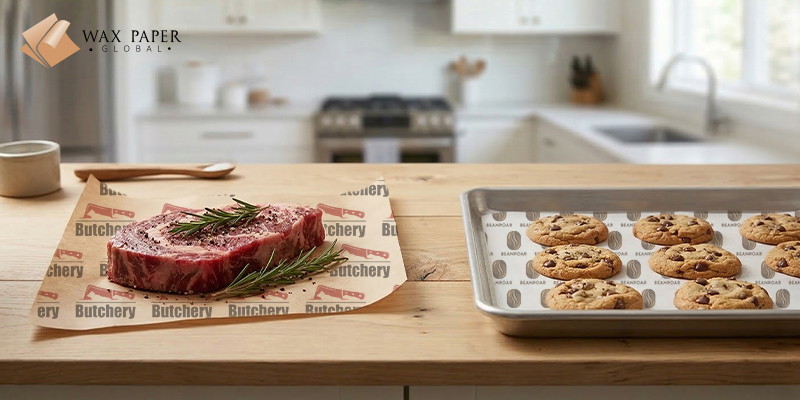
Butcher Paper vs. Parchment...
Discover how butcher paper and parchment paper differ in material, coating, and cooking uses. Find out which paper works...
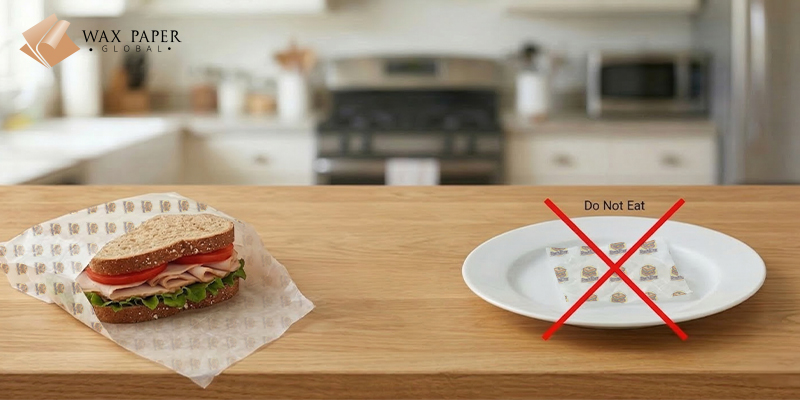
Is Wax Paper Edible or Harmf...
Learn if wax paper is safe to eat, its coating materials, and health risks. Understand proper usage and why it should no...
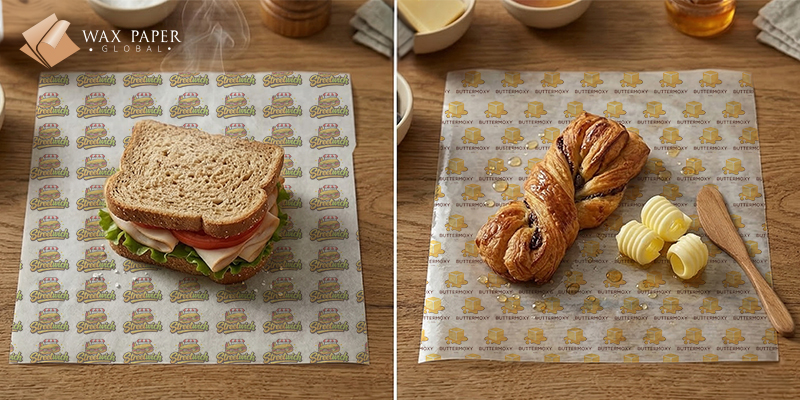
Dry Wax Paper vs. Wet Wax Pa...
Discover how dry and wet wax paper differ in texture, coating, and performance. Find out which option works best for wra...
Wax Paper vs. Parchment Pape...
Discover how wax paper and parchment paper differ in coating, heat tolerance, and usage for baking, cooking, and food pa...