Explore the complete manufacturing process of the greaseproof paper, from materials to pulp treatments, to refining and finishing, learn how it gains grease resistance without coatings.
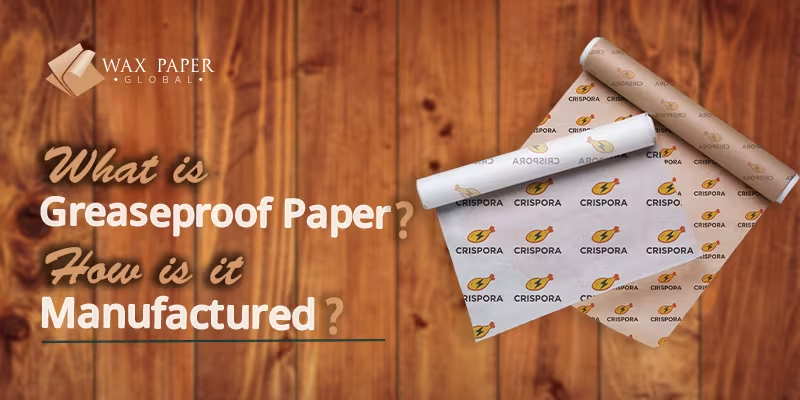
In today’s fast-paced food industry, greaseproof paper has become an essential packaging solution for food businesses that want professional and creative presentation without compromising on performance and safety. It’s a branding tool for businesses that care about both quality and aesthetics.
It’s a paper made from high-quality cellulose pulp extracted from softwood or hardwood. The main quality is achievable through tight bonding that leaves no pore space for oil to travel through. This process is known as fibrillation - an extreme beating that reduces porosity, creating a structure that distinguishes a greaseproof paper from other ordinary papers.
The paper machine turns the pulp into a sheet. Further the steam-heated cylinders which press out the water bring forth something that looks like a paper but still not the grease defying achiever we want. That value is gained through the supercalendering process. It is a series of hard or soft rollers that presses the paper under high heat and temperature. This step
Our custom greaseproof paper sheets are a mechanical marvel, still a light surface sizing takes things up a notch. Carboxymethyl cellulose (CMC), oxidized starch, Alkyl Ketene Dimer AKD, or Alginate. These sizing agents fill the microscopic gaps or pores and strengthen the sheet also resulting in improved runnability. Once the basic manufacturing steps are complete, a fully refined, compressed, and finished paper gets ready. And naturally people have questions reading its temperature tolerance and how well it performs in baking conditions. Get your complete guide on that in “can greaseproof paper be used for baking” having answers to all your questions.
If you are new to greaseproof paper, our “ultimate guide to greaseproof paper” covers everything for a full overview from grades to performance.
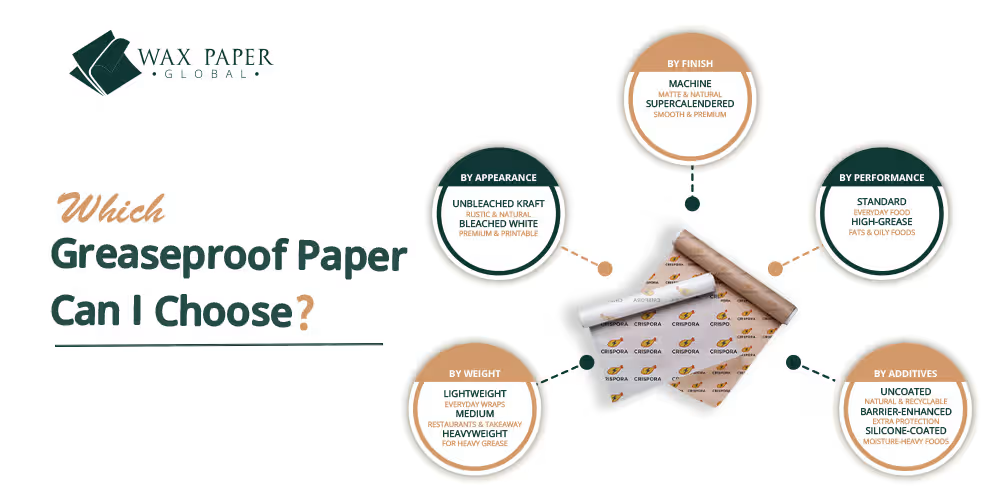
Greaseproof paper is versatile and serves many purposes providing a range of choice from which any individual can take maximum benefit. These can include;
Greaseproof paper comes in different basis weights. The scope of usage changes with the weight of the paper.
Customization is present to enhance presentation because aesthetics matter. Choose between;
Finish is relevant as it directly impacts the performance. Machine finish gives the most natural look with matte finish and is slightly more porous. Supercalendered on the other hand has a much smoother look with semi-translucent finish. It is more appropriate for heavy greasy food items and premium presentation.
Choose the best paper by its functionality. The standard greaseproof is great for everyday wraps. The high-grease resistant paper is best for food items with visible fats.
One important fact that needs to be considered here is that most uncoated greaseproof papers in both categories are microwave safe, but any coatings would make the paper contagious for oven use. Get more details on this aspect in “Can greaseproof paper go in the microwave?”
Most commonly used is uncoated greaseproof paper, since it provides clean food contact and brings a natural grease resistance. Meanwhile, the barrier enhancing greaseproof paper are surface sized, all are food-grade but can impact the recyclability of the paper. Additionally, silicone-coated sheets are also available, which are suitable for moisture-heavy foods.
Once you have figured out which type is best for you, here's where you can get the complete information on “Where can I buy greaseproof paper?”.
With so many finishes, grades, and performance levels available, choosing the right kind of printable greaseproof paper simply comes down to understanding the strengths of the paper with your cooking or packaging needs. All the trick lies in choosing the one that plays nicely with your food and aligns perfectly with your kitchen routine. Our comprehensive guides surely help in your decision-making process.
Can Wax Paper Go in the Oven
Learn whether wax paper can be used in the oven and why it may melt or burn. Discover safe alternatives and proper usage...
Butcher Paper vs. Parchment...
Discover how butcher paper and parchment paper differ in material, coating, and cooking uses. Find out which paper works...
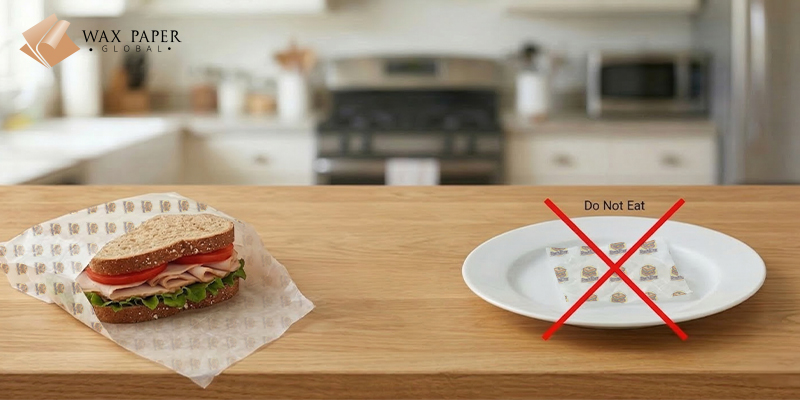
Is Wax Paper Edible or Harmf...
Learn if wax paper is safe to eat, its coating materials, and health risks. Understand proper usage and why it should no...
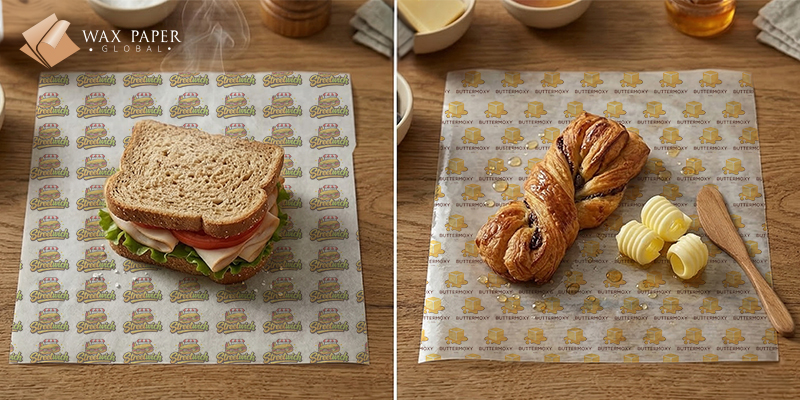
Dry Wax Paper vs. Wet Wax Pa...
Discover how dry and wet wax paper differ in texture, coating, and performance. Find out which option works best for wra...